


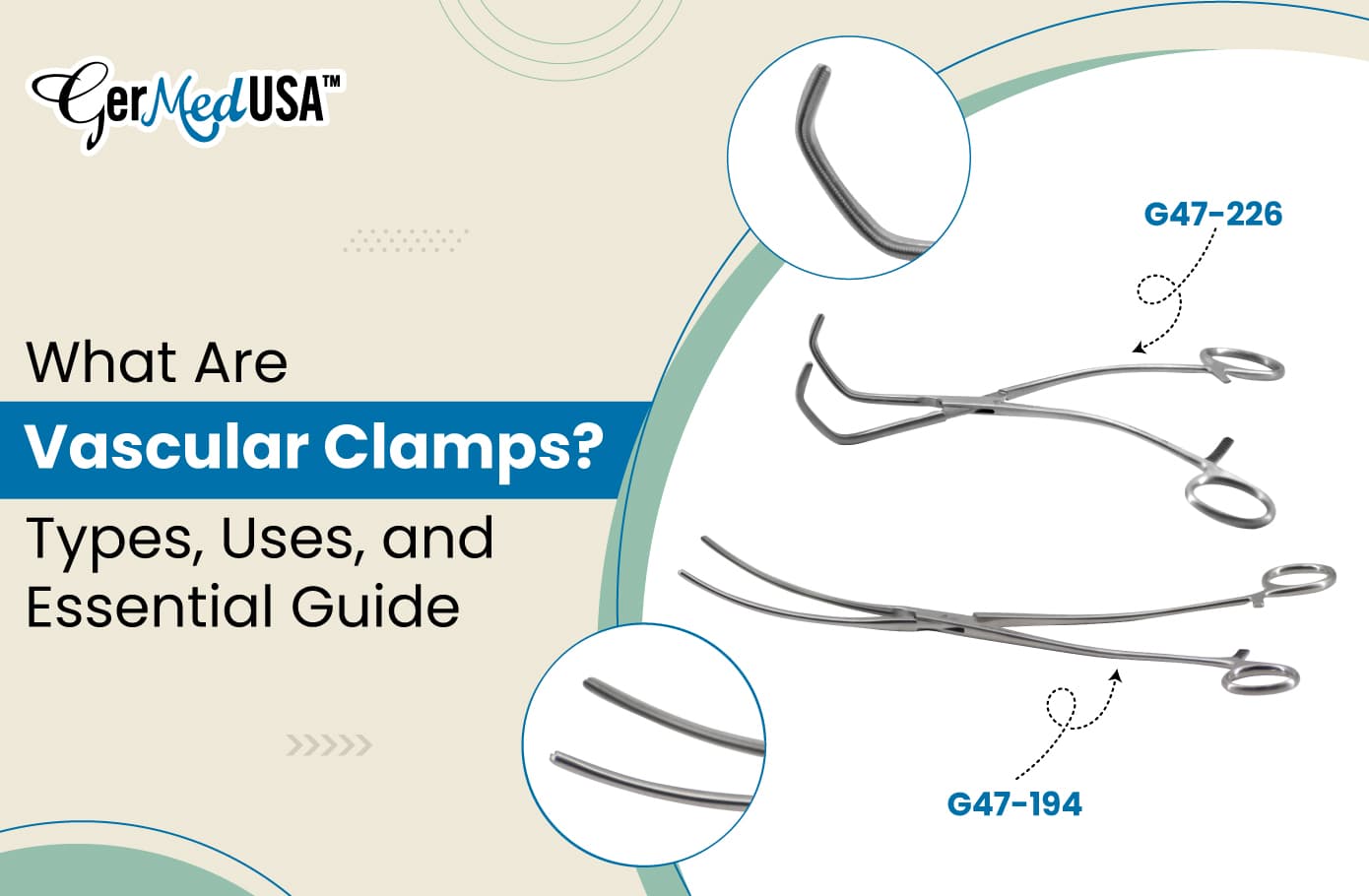
Surgeries become overcomplicated when there’s too much blood loss. To control excessive bleeding during surgeries, surgeons use vascular clamps. These surgical instruments clip the blood vessels and prevent hemorrhage.
Vascular clamps play a key role in controlling blood flow during surgical procedures.
In this article, we will take an in-depth look at vascular clamps. We will cover their types, clinical uses, maintenance, and their role in surgery.
Let's get started.
What are Vascular Clamps?
In vascular and cardiovascular procedures, maintaining hemostasis and vessel control is essential. Without proper control of blood flow, the consequences can be life-threatening.
Surgical clamps typically resemble a cross between scissors and pliers. This design gives surgeons a steady, controlled grip, helping reduce the risk of tissue damage during surgeries. The atraumatic jaws apply mild pressure to blood vessels. Depending on the surgical need, they are available in a range of shapes and sizes.
Clinical Overview
In vascular surgery, keeping tissues intact is as important as stopping the blood flow. Vascular clamps utilize atraumatic jaws to exert enough pressure to stop flow without crushing the endothelial lining or causing intimal hyperplasia.
Moreover, surgeries require a clear, visible area so the surgeon can work with precision. Vascular clamps stop the bleeding on the surgery site and keep it clean and dry. These instruments also stabilize tissues, secure organs, and help in precise organ and tissue handling.
However, every surgery requires a special type of medical clamp. Some compress blood vessels, and some hold organs or tissues in place.
Therefore, surgeons need to be very specific while choosing the right vascular clamp for medical procedures.
What are the Main Types of Vascular Clamps?
Vascular clamps are categorized according to their design and function. They are available in straight and angled designs.
Regardless of type, these precision instruments with ergonomic design ensure safe surgical procedures.
The main types of vascular clamps are outlined below.
Satinsky Vascular Clamp for Vena Cava
The Satinsky clamps are primarily used for peripheral occlusion of large vessels in vascular surgeries. They help in the partial occlusion of large vessels (aorta or vena cava). The Satinsky clamps are designed to partially occlude the vessel lumen. Thus, allowing blood to flow in the unclamped part.
Key Features
• U-shaped, angled beaks for precise vessel access in confined spaces
• Long shanks for improved reach during deep surgical procedures
• Ratchet-lock mechanism for stable, hands-free occlusion
• Ergonomic finger ring handles for better grip and control
Applications
• Partial or complete occlusion of the vena cava during surgery
• Cardiothoracic surgical procedures requiring blood flow control
• Vascular clamping in bypass and reconstructive surgeries
DeBakey Vascular Clamp
Designed to occlude blood flow, DeBakey Vascular Clamps provide reliable control in aortic and vascular surgeries. Their atraumatic design supports secure vessel handling. These are suitable for cardiovascular interventions such as aortic aneurysm repair.
Key Features:
• Atraumatic fine serrated jaws
• Precise tip control for delicate vessels
• Lightweight and easy to handle
• Secure ratchet mechanism for stable clamping
Applications:
• Atraumatic clamping of delicate blood vessels
• Cardiovascular and thoracic surgeries
• Vascular anastomosis procedures
Satinsky DeBakey Vascular Clamp
Designed with atraumatic DeBakey serrations and an angled Satinsky profile, the Satinsky-DeBakey Vascular Clamp enables partial or complete occlusion of veins and arteries. Its design supports gentle vessel handling. Thus, Satinsky-DeBakey vascular clamps minimize tissue trauma and the risk of complications.
Key Features:
• Atraumatic DeBakey-style toothed jaws for secure, gentle vessel grip
• Curved, double-angled design for improved access (especially vena cava)
• Ergonomic finger ring handles for comfort and precise control
• Ratchet locking mechanism for stable, hands-free occlusion
Applications:
• Partial or complete occlusion of the vena cava during surgery
• General vascular control in complex surgical procedures
• Used in bypass surgeries and endarterectomies
DeBakey-Derra Anastomosis Vascular Clamp
It is a highly specialized instrument used in cardiovascular and vascular procedures. The DeBakey-Derra Anastomosis Vascular Clamp is used to support controlled vessel occlusion during anastomosis. Its atraumatic jaw design helps gently clip the blood vessels in surgical procedures.
Key Features:
• Fine DeBakey serrated jaws for secure yet atraumatic vessel handling
• Curved hook jaw design for precise control and reduced slippage
• Ratchet locking mechanism for stable, hands-free positioning
• Ergonomic ring handles to reduce fatigue during long procedures
Applications:
• Coronary artery bypass grafting (CABG) and cardiac repairs
• Aortic valve replacement and vascular graft anastomosis
• Temporary occlusion of major vessels (carotid artery, aorta, vena cava)
Cooley Pediatric Vascular Clamp
Cooley Pediatric Vascular Clamps are used to clamp small blood vessels. Their calibrated jaw markings support accurate vessel handling during delicate surgical interventions.
Key Features:
• Atraumatic serrated jaws for gentle vessel handling
• Curved design for better access to deep surgical areas
• Strong grip for reliable vessel occlusion
• Secure locking mechanism for stable control during procedures
Applications:
• Aortic and major vessel clamping in cardiac surgery
• Vessel reconstruction procedures
• Cardiopulmonary bypass surgeries
Cooley Derra Pediatric Vascular Clamp
The Cooley Derra Pediatric Vascular Clamp is used for controlled handling of sensitive vascular tissues during anastomosis and other vascular surgeries. Its atraumatic serrated jaws and curved shanks support secure vessel occlusion while minimizing tissue trauma. The ergonomically designed finger-ring handles provide a stable grip, and the self-retaining ratchet mechanism allows hands-free operation to improve surgical efficiency.
Key Features:
• Atraumatic serrated jaws for the gentle handling of delicate pediatric vessels
• Curved shank design for improved access to deep or small surgical sites
• Ergonomic finger ring handles for precision and reduced hand fatigue
• Self-retaining ratchet lock for stable, hands-free clamping
Applications:
• Pediatric cardiac surgeries (e.g., valve repair, CABG in children)
• Vascular anastomosis procedures for blood vessel reattachment
• General pediatric vascular surgeries involving small or fragile vessels
Glover Coarctation Clamp
The Glover Coarctation Clamp is a specialized surgical instrument used for precise occlusion of blood vessels, especially in aortic and cardiovascular procedures. It provides reliable vessel control with minimal tissue damage.
Key Features:
• Fine serrations for smooth, non-traumatic vessel handling
• Ergonomic design for improved surgical access
• Firm clamping action for effective flow control
• Sturdy construction for dependable use in vessel and ducts clamping
Applications:
• Temporary occlusion of blood vessels
• General vascular and abdominal surgeries
• Bleeding control during vessel repair
[BONUS] - Glover Clamps for Gastrointestinal Surgeries
Alongside vascular clamps, Glover clamps are also part of our comprehensive surgical instrument range, designed to support controlled vessel clamping in both vascular and duct-related procedures.
These instruments are engineered to ensure minimal tissue trauma during delicate surgical interventions.
Glover Duct Clamp
The Glover Ducts Clamp is designed for occlusion of ducts, including bile and pancreatic ducts, as well as blood vessels in delicate surgeries. Made from premium German stainless steel, it features a reliable ratchet locking mechanism that maintains secure positioning throughout surgery.
Key Features:
• Atraumatic jaws (straight and curved options) for secure, tissue-safe occlusion
• Ratchet locking mechanism for stable, hands-free clamping
• Ergonomic finger ring handles for precise and comfortable control
• Premium stainless steel construction for durability, corrosion resistance, and reusability
Applications:
• Cardiovascular surgery for temporary blood vessel occlusion and flow control
• Abdominal surgery for clamping the bile or pancreatic ducts to prevent leakage
• Thoracic procedures requiring precise duct or vessel management
How to Select the Right Vascular Clamp?
The choice of surgical clamp depends on the procedure, tissue involved, and precise surgical requirements. Size, shape, material, ergonomics, and regulatory compliance ensure better surgical outcomes.
Here are some points that will help in choosing the right vascular clamp for surgical procedures.
• Type of Surgery: Choose specialised clamps based on cardiovascular, microvascular, or general procedures
• Vessel Size & Sensitivity: Match clamp size and pressure for safe, effective occlusion
• Jaw Design: Use straight for open access. Angled or curved clamps are for confined areas
• Atraumatic Features: Opt for fine jaws to minimize damage to delicate vessels
• Material Quality: Select surgical-grade materials for durability and reliability
• Handling & Control: Ensure a secure grip and balanced design for precision
Maintenance Tips for Vascular Clamps
Proper maintenance of surgical clamps is essential to ensure long-term performance.
Following protocols helps preserve the instrument and minimize the risk of surgical complications.
• Use procedure-specific vascular clamps
• Handle with care during procedures
• Inspect before every use
• Follow sterilization protocols
• Store instruments properly
Note: Careful instrument handling and maintenance ensure safety and surgical success.
Common Mistakes to Avoid While Using Vascular Clamps
Surgeries are intricate procedures where there is no space for minor errors.
To ensure consistent instrument performance in clinical practice, avoid the following mistakes:
• Applying too much strain on tissues
• Skipping pre-use inspection
• Inadequate cleaning before sterilization
• Improper sterilization methods
• Poor or unorganized storage
• Using worn or damaged instruments
Avoiding these mistakes helps improve surgical efficiency and reduce complications.
Why Choose Us?
GerMedUSA is committed to manufacturing high-quality surgical instruments that support advanced surgical practices. As a trusted supplier, we deliver medical-grade instruments. Manufactured from high-quality German stainless steel, our surgical instruments are durable and corrosion-resistant. They deliver consistent, reliable performance across a wide range of procedures.
Conclusion
Every surgery demands precision. Vascular clamps play a critical role in ensuring safe and effective outcomes in surgical procedures. A clear understanding of their types and correct usage is a must for medical professionals.
GerMedUSA offers a range of high-quality vascular clamps. Every product undergoes strict quality checks. Our manufacturing process complies with FDA guidelines, ensuring both safety and consistent quality.
FAQs
1. What’s the difference between vascular clamps and intestinal clamps?
Vascular clamps are used to occlude blood vessels such as arteries and veins to control blood flow. Intestinal clamps are used to clamp sections of the intestine to prevent the leakage of contents during gastrointestinal procedures.
2. Is the Glover clamp a vascular clamp?
Yes, Glover clamps are a type of vascular clamp. They are used to occlude and control blood flow in vessels during surgical procedures and are considered versatile instruments for general vascular applications.
3. What is the difference between forceps and clamps?
Forceps are used to grasp and handle tissue or objects and usually do not have a locking mechanism.
Clamps are designed to occlude or hold structures with pressure and typically include a locking (ratchet) mechanism.
4. In which surgeries are vascular clamps used?
Vascular clamps are used in surgeries where controlling blood flow is essential, including cardiovascular, vascular, thoracic, and transplant procedures.
They are also used during aneurysm repair, vessel grafting, and microvascular surgeries to ensure a clear and controlled surgical field.
5. Is the Stille pattern vascular clamp a type of vascular clamp?
No, a Stille pattern vascular clamp is not a specific type of vascular clamp.
“Stille pattern” refers to a design or manufacturing style, not a function-based category. It describes how the instrument is made, while the actual type (e.g., DeBakey, Satinsky) defines its surgical use.